Weste
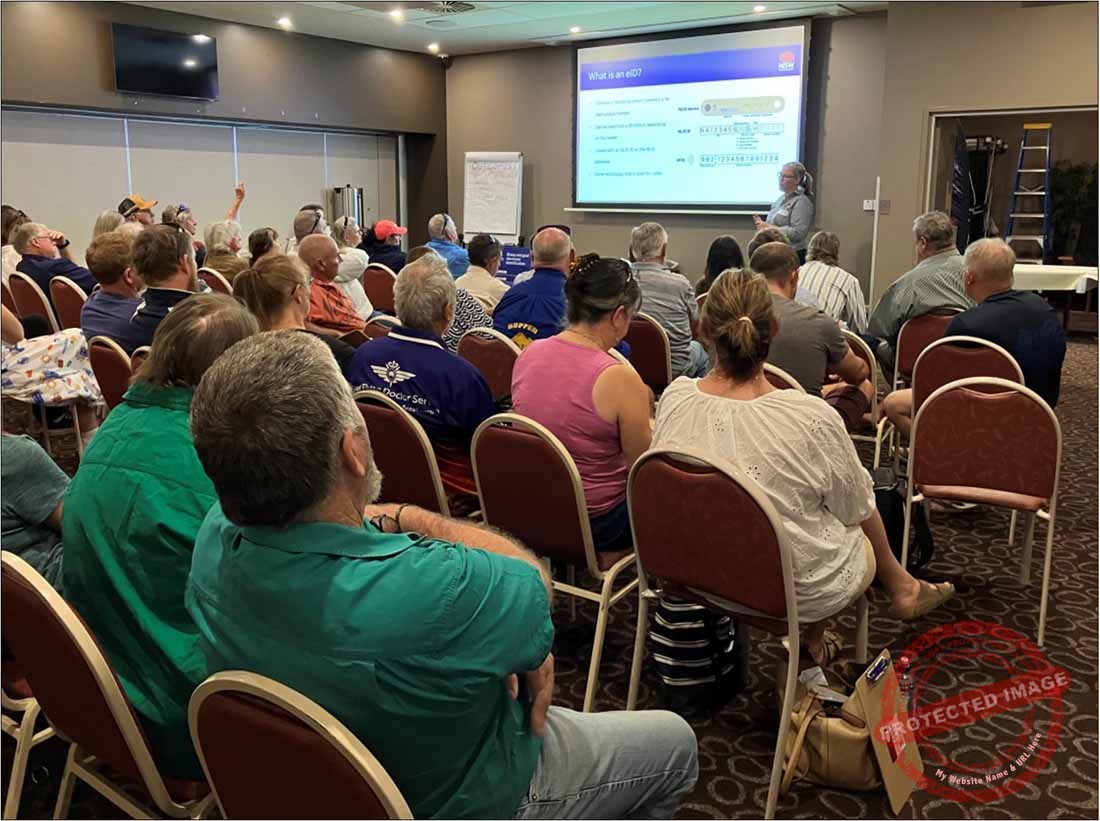
rn Local Land Services (Western LLS) hosted three workshops last week across the region to help support landholders and stakeholders through the transition to mandatory individual sheep and goat electronic identification (eID).
The workshops, one of which was held in Cobar, were a great opportunity to inform landholders how they could get the most out of eID technologies for their farm businesses as well as provide information on the tag-free pathway for harvested rangeland goats.
The workshops, held in Cobar, Broken Hill and Anabranch (near Wentworth) and were all well attended.
Western LLS Senior Biosecurity Officer – eID, Lynda Watson said the Cobar workshop was the best attended with 50 producers present, while 19 producers attended Broken Hill and 25 attended the workshop at Anabranch.
Ms Watson said the workshops, which provided eID information, practical demonstrations and tips and tricks, were pre-planned as part of the eID scheme rollout.
These three workshops follow on from another five workshops that were held in various western area locations at the end of last year.
“The workshops have been a great way to engage with landholders and stakeholders about the transition to eID and we’ve been pleased with the strong interest,” Ms Watson said.
“The discussions and feedback at the three events was positive, with landholders pleased to hear about the support available, such as the eID Tag Discount Program.
“There was a range of landholders who attended the sessions, with some just wanting to know what the eID requirements are that they need to operate within, and others wanting to explore further opportunities that eID technologies present,” she said.
The topics of most interest at the Cobar workshop (which were also reflected at the Broken Hill and Anabranch workshops), were: timelines of the eID transition; requirements for the tag-free pathway for harvested rangeland goats; the uses and benefits of different eID equipment; and what eID tags work best.
The Cobar workshop was well received with most producers indicating they experienced an increase in knowledge and skills on the topics presented and the eID requirements and benefits of eID equipment on a whole.
The workshops are one of the many ways Western Local Land Services and the NSW Government are communicating and engaging with landholders and stakeholders about the transition to eID.
“As always, we welcome feedback from our landholders and stakeholders.”
Landholders in the Western region who have a question or are having issues with the transition to eID can contact Ms Watson.
More information about the transition to sheep and goat eID, including the eID Tag Discount Program, can be found online at: www.dpi.nsw.gov.au/dpi/bfs/your-role-in-biosecurity/primary-producers/nlis/eID