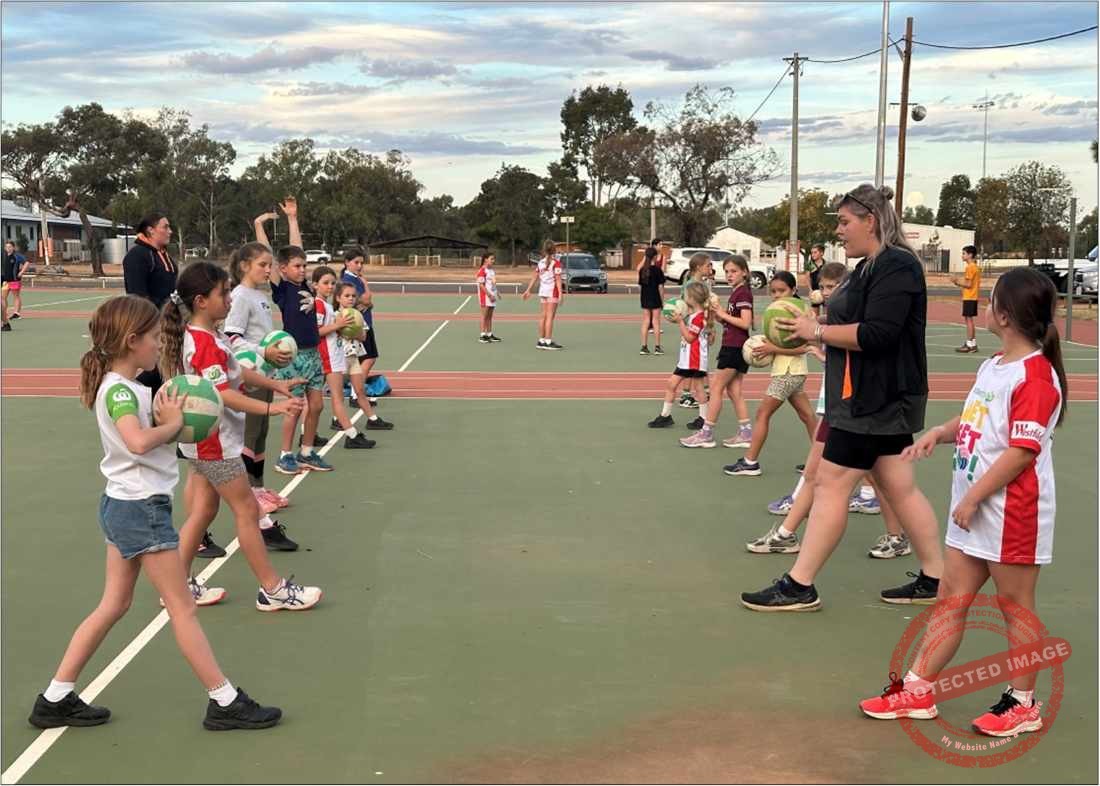
Association’s social netball night on Friday at the Ward Oval courts.
The Cobar Netball Association is working to rebuild player numbers and reinvigorate interest in the sport, as it looks to regain some of its former glory and secure a strong future for netball in the community.
Club president Mary Urquhart said the committee has been reviewing participation trends over the past few years, not just within netball but across all local sports, in a bid to understand why numbers have declined in both the junior and senior competitions.
While Cobar has always had a strong sporting culture, increasing costs of living and growing competition between sports are making it harder for families to commit.
“We know Cobar kids love sport, and we want to support that in any way we can,” Mary said.
“But families are often having to choose between activities, and we don’t want that to be the case.”
In response, the association is introducing measures to make netball more accessible, including halving registration costs for juniors for the upcoming season.
Fees, which largely go to Netball NSW, will be subsidised by the local committee to ease financial pressure on families.
The club is also hosting “try before you buy” social netball sessions, giving new and returning players a chance to get involved before committing, while gathering feedback from parents and players about barriers to participation.
Mary said the committee would also like to see more opportunities for boys and men to play the sport.
Junior males can play up to the age of 17 and men are able to play in the Fast5 netball competition, however after the age of 17, males are not permitted by Netball NSW to play with women in the local senior netball competition.
Currently there is not enough interest from male players to establish a local men’s competition but the committee hopes in the future to be able to run a competition alongside the women’s game, to challenge outdated perceptions about the sport.
“Netball has never just been a girls’ sport,” Mary said.
“It builds agility, speed and teamwork, skills that transfer across many sports.”
Despite challenges, including fluctuating team numbers and the impact of fly-in, fly-out workforces on community sport, the committee remains optimistic.
With passionate volunteers, experienced players willing to mentor juniors, and a focus on skill development, the association is determined to grow.
“We’re trying to understand the ‘why’ behind the decline,” Mary said.
“Once we know that, we can keep building something that works for our families and the whole community.”