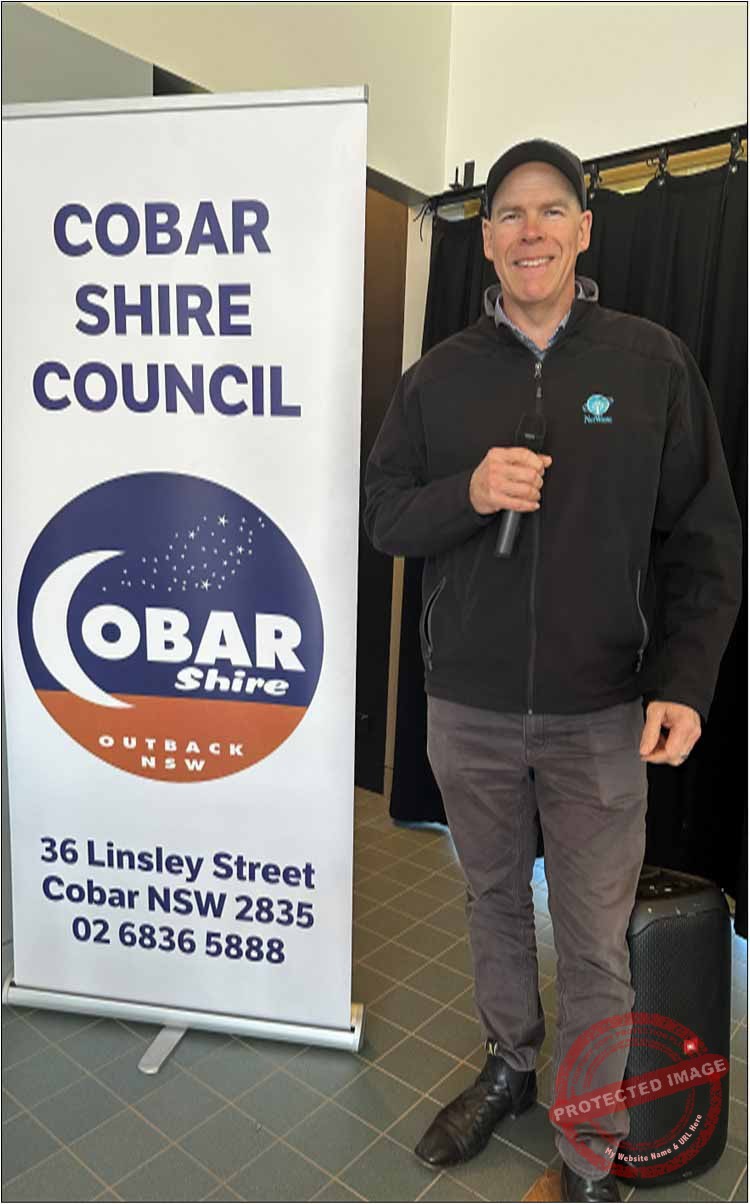
projects coordinator Anthony Cullen-Ward spoke about FOGO (Food Organics,
Garden Organics) which is to be
implemented by all councils by 2030.
FOGO might sound like a new acronym many of us haven’t previously heard before, however it’s not a new concept in Australia.
The FOGO (Food Organics, Garden Organics) system, which separates food and garden waste into a dedicated bin to be made into compost, is being implemented by councils across Australia as part of a national strategy to halve organic waste sent to landfill by 2030.
While some councils have had FOGO services for years, many others are in the process of adopting the system, with support and funding from state and federal governments.
FOGO and how it is to be implemented was a key focus at last week’s NetWaste Forum held in Cobar.
The Cobar Weekly spoke with Anthony Cullen-Ward, the regional projects coordinator for Netwaste, about FOGO at the forum.
“We are very keen on spreading the news on the FOGO mandate, which is a state mandate where every regional council across NSW must engage in some form of food and organics recycling and/or collection,” Mr Cullen-Ward said.
He said with the deadline now just five years away, regional councils are already being encouraged to start preparing—and organisations like NetWaste are helping Councils to make the transition.
Formed in 1995, NetWaste is a voluntary regional waste group supporting 25 councils and covering almost 40 per cent of NSW.
Funded primarily by the NSW Environment Protection Authority (EPA), NetWaste focuses on collaborative, cost-effective, and environmentally responsible waste solutions for its member councils.
At the Cobar forum, NetWaste brought together waste coordinators, council staff, and consultants to discuss how the FOGO mandate will affect rural and remote communities—many of which face unique logistical and financial challenges.
A presentation by Shaun Rainford from Arup Consulting outlined the practicalities of implementing kerbside collection or local processing, and Bathurst Regional Council’s Cherise Acker Cooper also shared their regional litter reduction strategy.
“We are looking at some major studies into how councils can realistically respond,” Mr Cullen-Ward said.
“There may be some councils that would require an exemption.
“We’re looking at a whole range of variables and how councils could best respond to it.”
Mr Cullen-Ward said to better address the challenges of FOGO NetWaste has already established a Western Councils FOGO Working Group, launched in April this year.
This alliance has secured 20 hours of consultant support to conduct a baseline report, assessing the region’s capacity to introduce organics recycling programs. The report is expected to be soon available and will help inform a broader regional strategy.
“We’re actually better positioned than quite a lot of other groups,” Mr Cullen-Ward said.
“We have 11 councils within our 25 council group that have food and organics collection already.
“However, we don’t know what the policy is going to look like, so it really is an information gathering and an information sharing exercise that we’re currently working on, in a regional and collaborative space at the moment,” Mr Cullen-Ward said.