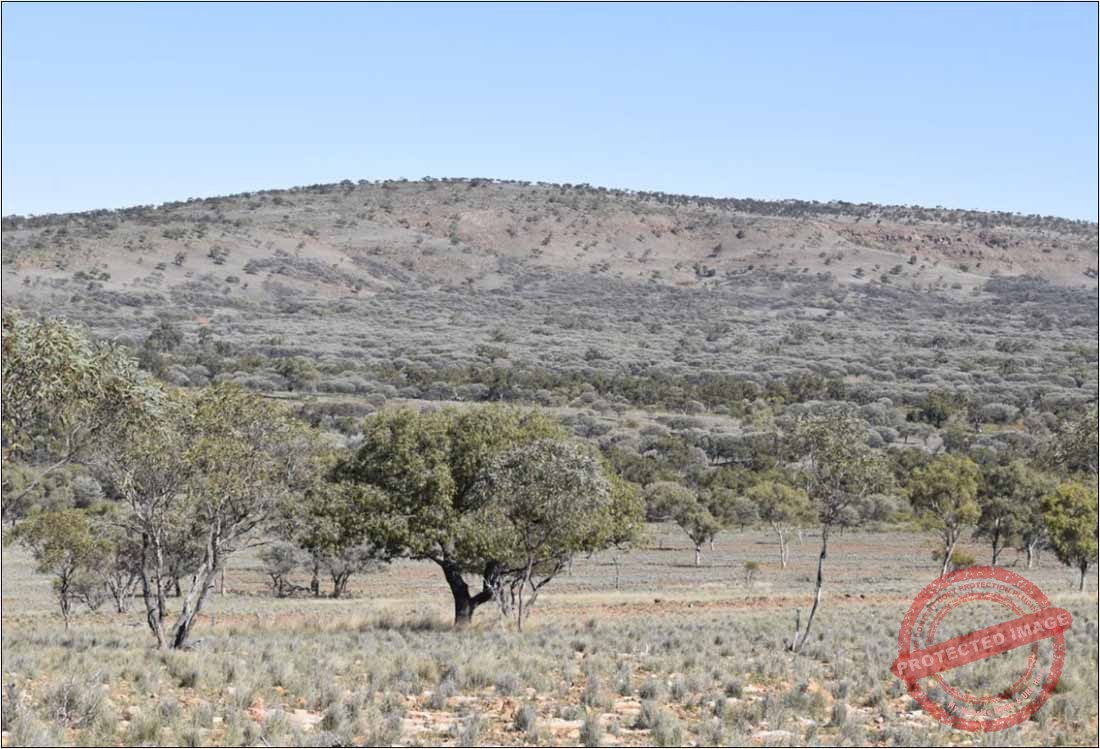
of NSW that has recently been added to the State Government’s networks of national
parks. Iona Church Hills photo courtesy of K Owen
The NSW Government’s recent acquisition of almost 35,000 hectares of land in north west New South Wales, has raised some questions with locals.
Three pastoral stations, Iona north west of Cobar, Bellenbar north west of Bourke and Innisfail, north west of Brewarrina, have recently been purchased by the State Government to be converted to National Parks.
State Member for Barwon Roy Butler is asking when is the State Government going to stop locking up agricultural land in western NSW?
Mr Butler said the conversion of pastoral land to National Parks damages the local community and nearby graziers.
“Newly-created National Parks no longer pay rates to local councils and cease to support many local businesses, leading to a hollowing out of the local economy,” Mr Butler said.
“The promise of increased tourism is usually dangled like a carrot, but local communities have seen enough National Park conversions to know that tourism doesn’t offset the revenue lost from a working station.
“The promised tourist infrastructure is rarely built and few, if any, jobs are created.
“The Government is buying land at a premium, which denies local families the opportunity to become pastoralists themselves and contribute to the local economy.
“I hear even more agricultural properties in western NSW are being targeted for purchase – when will it be enough?” Mr Butler said.
Advocates of expanding National Parks often point to environmental benefits, but don’t take account of increased pest animals.
“Former working stations that have been converted to National Parks have a bad reputation for serving as pest animal breeding grounds,” he said.
“Fences and watering holes usually aren’t maintained, so pest animals find refuge in National Parks then advance onto neighbouring lands and cause problems for graziers.
“One solution I’ve been advocating for is to allow conservation hunting on far western National Parks that don’t have tourism infrastructure.
“This would also bring revenue from conservation hunters into the community, helping offset the loss of the working station.
“Rather than locking up thousands of hectares to protect ecologically significant areas or vulnerable ecosystems, these lands would be better entrusted to landholders as stewards of the land,” Mr Butler said.
“Many graziers I have met are great caretakers of the land and creating National Parks is not the only way of caring for the environment,” Mr Butler said.
Local businessman and landholder Chris Deighton also questions the need for more land to be converted to national parks.
In a social media post, Mr Deighton said unmanaged fencing infrastructure will create breeding grounds for feral animals.
He is also concerned about stress on watering points, the loss of rates for councils, the loss of productive jobs and families living in the region, and the loss of produce to sell.
Mr Deighton supports a petition being organised by community members of the Bourke district who are also concerned about the rapid expansion of the National Parks estate in western NSW.
To date the petition has 740 signatures and, while it recognises that National Parks play a worthwhile “role in preserving cultural heritage, assisting environmental conservation and supporting the ‘pastoral’ regions tourism industry”, the petition said “without proper consultation, management and planning, these goals are at odds to the betterment of the community health as a hole (sic)”.
Following the announcement of the National Parks acquisition of the three stations last week, another local resident, Bill Lord, also raised his concerns about a lack of government consultation with local Aboriginal communities.